Thursday, July 15, 2010

Contemplating the Bottom Line

© 2010 Jane Fulton Alt ~ No Life Guard on Duty

It has been a wild ride with the proliferation of Crude Awakening across the internet. I am thrilled with the exposure the photographs are getting as the state of affairs with our environment is grave... hopefully this work will facilitate more discussion.

I was interviewed briefly yesterday morning by a talk radio show in Dublin, Ireland. I hung up feeling a bit disparing as the host inferred that our collective greed had gotten us into this disaster as he referred to BP's "bottom line" and consumers seeking low cost products. I don't really know how to reconcile this as it seem that greed has been a trait of human nature thru out time.

I started to think about Buddhist teachings and came across an interesting quote by the Dalai Lama. "Because self and others can only be understood in terms of relationship, we see that self-interest and others' interest are closely interrelated and there is no self-interest completely unrelated to others' interests. Due to the fundamental interconnectedness which lies at the heart of reality, your interest is also my interest: in a deep sense, "my" interest and "your" interest basically converge."

My friend, Paul added...
"How, in the Buddha's terms, a thought becomes a word, which becomes an action, which becomes a disposition. So, too, of our motivations, so that this oil spill is inextricably tied up with our own desires and needs, and we cannot honestly condemn the spill unless we are willing to acknowledge that it is not separate from ourselves: not just the consequences (which is why your pics are being picked up), but not separate from our own appetites."

Tuesday, July 13, 2010

excerpts from "What Is Art?" by Leo Tolstoy

In response to all the internet discussion surrounding Crude Awakening...

"Art begins when one person, with the object of joining another or others to himself in one and the same feeling, expresses that feeling by certain external indications. To take the simplest example: a boy, having experienced, let us say, fear on encountering a wolf, relates that encounter; and, in order to evoke in others the feeling he has experienced, describes himself, his condition before the encounter, the surroundings, the woods, his own lightheartedness, and then the wolf's appearance, its movements, the distance between himself and the wolf, etc. All this, if only the boy, when telling the story, again experiences the feelings he had lived through and infects the hearers and compels them to feel what the narrator had experienced is art. If even the boy had not seen a wolf but had frequently been afraid of one, and if, wishing to evoke in others the fear he had felt, he invented an encounter with a wolf and recounted it so as to make his hearers share the feelings he experienced when he feared the world, that also would be art. And just in the same way it is art if a man, having experienced either the fear of suffering or the attraction of enjoyment (whether in reality or in imagination) expresses these feelings on canvas or in marble so that others are infected by them. And it is also art if a man feels or imagines to himself feelings of delight, gladness, sorrow, despair, courage, or despondency and the transition from one to another of these feelings, and expresses these feelings by sounds so that the hearers are infected by them and experience them as they were experienced by the composer.

And it is upon this capacity of man to receive another man's expression of feeling and experience those feelings himself, that the activity of art is based.

The stronger the infection, the better is the art as art, speaking now apart from its subject matter, i.e., not considering the quality of the feelings it transmits.

I have mentioned three conditions of contagiousness in art, but they may be all summed up into one, the last, sincerity, i.e., that the artist should be impelled by an inner need to express his feeling. That condition includes the first; for if the artist is sincere he will express the feeling as he experienced it. And as each man is different from everyone else, his feeling will be individual for everyone else; and the more individual it is - the more the artist has drawn it from the depths of his nature - the more sympathetic and sincere will it be. And this same sincerity will impel the artist to find a clear expression of the feeling which he wishes to transmit."

Thank you, Dick, for sharing this essay so many years ago...
(This essay (originally published in 1896) and the translation by Alymer Maude (first published in 1899) are in the public domain and may be freely reproduced.)

Monday, July 12, 2010

BP in Whiting Indiana ~ Photographs by Lloyd Degrane

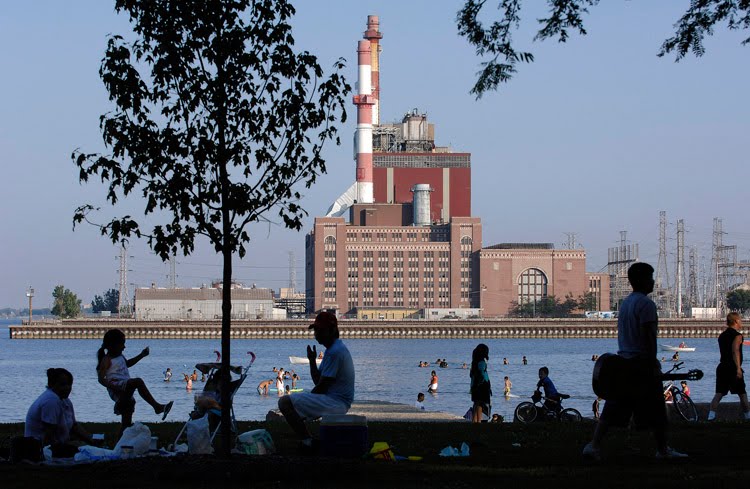
In 2007 there was a big uproar about BP dumping ammonia and industrial sludge into Lake Michigan. A Chicago Tribune article, BP Gets Break on Dumping in Lake, spelled out what was happening. A fellow photographer, Lloyd Degrane, has been photographing in Whiting, Indiana for some time now.

© Lloyd Degrane

Here is what he says....
"I've been working on a documentary project for a few years now and took these along the shore and nearby industrial sites of Lake Michigan. The Whiting,In. BP Refinery is only 15 miles from downtown Chicago. Up until the Gulf oil spill the Indiana refinery was surging ahead with their planned 100% expansion that would allow for the refinement of Canadian Tar Sands. The Tar Sands project starts in Alberta Canada. There, it's roughly refined and then would be shipped to Whiting for final refinement, right on the Lake Michigan shoreline. Tar sands oil is the dirtiest oil on the planet. It also requires a huge amount of energy to process. The one good thing about the Gulf oil disaster is that the Tar Sands project has been put on hold."

© Lloyd Degrane

Sunday, July 11, 2010

BP and where I live

Just got an email this morning from Ben Prisk who lives in Ocean Springs, MS. The following is a post from his blog.

"I ran across the image below tonight at Boingboing. It was done by photographer Jane Fulton (look at the rest of her work please).

Currently, our barrier islands are doing a fair job of keeping the oil at bay. Growing up, I used to hate those islands, because they kept our water from being a brilliant green (as it was when you sailed to those islands). Now those islands are covered in the oil that all the other states are encountering.

I've held a bag of that oil....it has the weight and consistency of molten liver. I've talked to the men trying to skim it. When the oil splashes onto the boats, it takes an acidic cleaner and a lot of 'elbow grease' to remove it (hours).

I spoke to a friend of mine who owns a gorgeous wooden boat that BP tried to hire....he looked at the fine print in the contract and it said that 'all wooden boats would have to be destroyed after the event'. He declined, as his 52 ft boat was built in 1939 by a 19th century local boat builder wiped out by Katrina.

Thanks barrier islands.

If I were a wealthy man, I would license her images from her, have them printed in bus-stop size format and have them placed along the coast.... no logos ... no words ... only a tiny photo credit. Her work says it all."

© 2010 Jane Fulton Alt ~ Keith, Laura and Olivia

Thursday, July 08, 2010

back from Mexico City

Just returned from a 4 day staff trip with Rick Bayless & company....and some company it was! The people who work at Frontera Grill/ Toplobampo/Xoco are amazing in their passion, dedication and curiosity of all things Mexican. I am overwhelmed with all that I was exposed to.


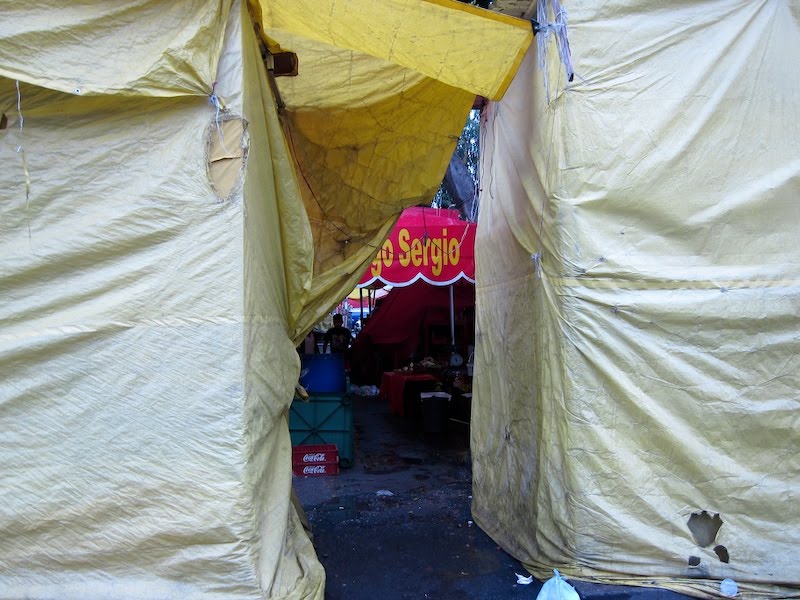
The main food market in Mexico City , La Merced Market, is one of the biggest on the planet. Driving there was a challenge. What was normally supposed to take 10 minutes of travel time took a full hour, so we had to literally race thru the market as many stalls were closing down. We were instructed by Rick to stay close and follow. It was a great photographic experience for me as there was NO THINKING time, just reacting.


The market area is also known for flagrant prostitution in which women can be seen soliciting at all hours of the day and night.
Merced is considered to be a “tolerance zone” for prostitution, meaning that police generally do not intervene. Prostitution exists in just about all parts of Mexico City but it is most obvious here.


more to follow....

Saturday, July 03, 2010

Calling for the Pelicans

© 2010 Jane Fulton Alt ~ Itay

"As I was watching the world cup on TV, a commercial from BP came on with a phone number to make a claim for anyone that has been harmed by the effects of the recent oil spill. The commercial went on and on about how BP is trying to make things right by replacing the lost livelihoods of fishermen and others living on the Gulf Coast, but I couldn't help but wonder what would happen if I called in and made a claim...as a pelican. I've come to realize how people are so concerned with the safety of the oil rig workers or how the fishing industry in the Gulf is in ruins, but what about the pelicans? What about the environmental repercussions that the oil spill has caused? I think that when man makes mistakes that cause himself problems, that is own business, but when our thirst for oil disturbs the processes of nature, we are responsible for the damage. The horrifying images of pelicans struggling to get out of the water, drenched in oil, are constant reminders of the severity of the environmental crisis in the Gulf Coast. I'm calling BP to make a claim for the pelicans, because they've been affected by the spill as much as anyone, although they don't want a check in the mail. All they want is to have the water where they feed and live to be free of fossil fuels so they can go about their business. They can't do it themselves, and it is up to us to make a difference throughout this environmental catastrophe. I'm calling for the pelicans."

Itay ~ age 16

US Could Learn Plenty from European Energy Policy

Thursday, July 01, 2010

History Repeating Itself in the Creative Process

©2010 Marissa

©2000 Emily

© 1996 Katie

Also, some nice coverage of Crude Awakening today in the Chicago Tribune, 3rd page front print section, front page webpage and on a green energy blog, EnergyBoom Policy and the NBC Chicago News blog.

June 1, 2010 Chicago Tribune Front Web Page